Niseko Hirafu Ski Guide: Trail Highlights, Night Skiing, and Coach-Tested Routes, All in One Place
Hirafu is the largest of Niseko's four resort areas, with over 20 runs, but most visitors only ever ski the main line. FUYU ski coaches break down Hirafu's essentials, night skiing hours, and safety notes, plus two insider routes our coaches actually use in lessons, complete with lift connections and where people tend to get lost.
Last updated: 22 October 2026 | 26-27 season
The 30-second version: how to ride Hirafu
The basics: 20+ runs · about 940 m of vertical · main lifts Ace Gondola / King Gondola · night skiing until 7pm
Tree run loversAdvanced and up, already turning with control | A natural pipe feature, and trees that aren't too dense
Skill buildersJust past beginner, working on steady turns | Uncrowded, gentle terrain, the prettiest stretch under the lights
Not sure of your level?A two-minute quiz will tell you →
Hirafu Trail Basics
Hirafu is the largest of the four ski areas that make up Niseko United, sharing Mt. Niseko Annupuri with the others. The summit sits at about 1,200 meters, the base at around 260 meters, giving a vertical drop of nearly 940 meters. The area has over 20 runs, with the longest stretching 5.6 kilometers, covering roughly 325 hectares of terrain. Two main lifts, the Ace Gondola and King Gondola, form Hirafu's backbone, connecting the base to the main practice areas partway up the mountain. Several branch lifts (King Hooded Lift #3, Ace Pair Lift #3, King Lift #4, and others) divide the mountain into sections of varying difficulty.
Related: How to Buy Niseko Lift Tickets: The Most Common Points of Confusion
Why Hirafu Is Famous
Hirafu was the first area developed in Niseko, with its lifts running since 1961, the longest history of the four resort areas. The word "Grand" in its full name reflects, in a sense, that it's the original template for the whole resort. What really put Hirafu on the international map was the wave of Australian tourists that began arriving in the early 2000s. After 9/11, Australians discovered that Hirafu had more snow than Whistler and was a shorter flight than North America, and Hirafu grew alongside that demand into Niseko's densest cluster of restaurants, bars, and accommodation, making it the liveliest and most international of the four areas.
Of course, the real underlying reason is the snow itself. The Niseko area averages about 15 meters of snowfall a year, making it one of the most reliably consistent powder destinations in the world. Hirafu is the area with the most varied terrain of them all.
What Makes Hirafu Different
There are no physical fences between Hirafu's runs: within the resort boundary, you're free to move between runs, and between runs and the trees. That's why FUYU coaches can lead routes straight into the trees beside the Center run to hit fresh powder, instead of being confined to the marked trails.
That freedom has its limits, though. The trail map marks a red dashed line as the "Resort Boundary". You can roam freely inside that line, but never cross it. The entire Niseko area is patrolled, so never step outside the boundary just because it looks empty or fun.
Night Skiing in Hirafu
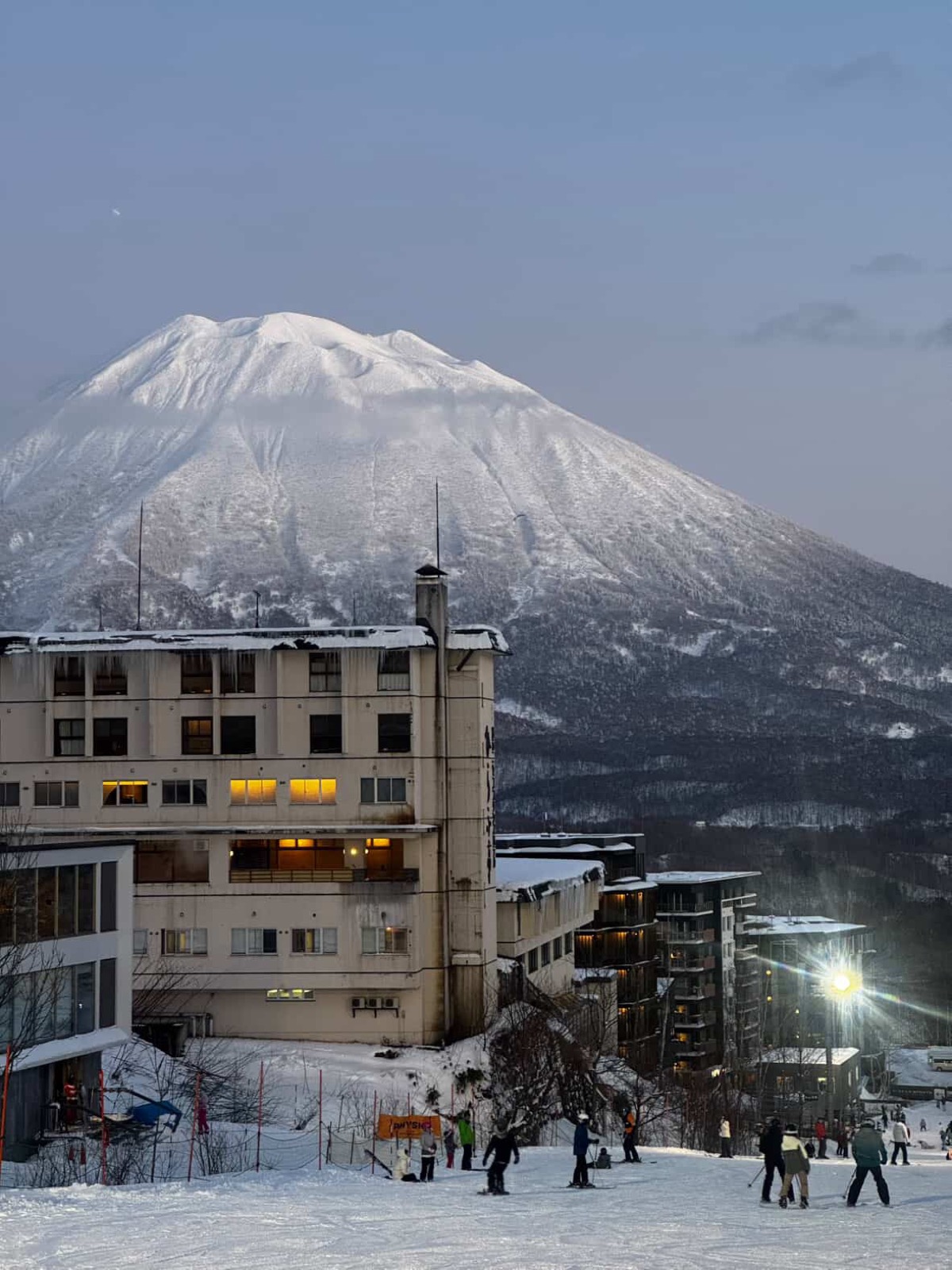
Night skiing in Hirafu runs until 7 PM, with the Family, Ace Gondola, King Gondola, and King Holiday Pair lifts open. Once the lights come on, you can actually see the terrain contours more clearly (great for beginners), and you can also see Hirafu's town lights from the runs, a completely different feeling from skiing during the day. Which runs and lifts are actually open depends on the day's conditions, so we recommend checking the official operating status before you go.
Hirafu Route Recommendations: Two Routes Our Coaches Actually Teach
Hirafu really does have a huge number of runs, but most visitors only ever ski the main line. Here we're sharing two routes FUYU coaches actually use in lessons (and ski themselves on days off), matched to what you're trying to get out of your trip.
Follow along with the marked trail map below. No need to figure out the route yourself on the map.
Route 1: Tree Run Lovers | For Weaving Through Trees and Powder Terrain
Route: Take the Ace Gondola up, transfer to Ace Pair Lift #3, then turn right off the lift, pass the bell-ringing area (King Bell Hut), and cut over to the far-left side of the Center run. The whole tree section here is open to ski. Heading back down, staying right takes you back to Ace Pair Lift #3, and staying left takes you back to King Hooded Lift #3.
A small tip: Ace Pair is an open chairlift, which gets very cold in windy conditions. If you're sensitive to the cold, take King Hooded Lift #3 instead. Turn left off the lift and follow a narrower connector trail, which also brings you back to the far-left side of the Center run.
Safety notes: The Center run often has beginners practicing on it, so keep good distance when passing through. The terrain lower down this run is fairly flat, so it's worth carrying a bit more speed. If you're heading back to Ace Pair Lift #3, staying to the right as you approach the lift station lets the terrain help carry your speed up. The King Hooded Lift #3 connector trail can get crowded at times, so stay alert.
Easy to get lost: On the King Hooded Lift #3 route, cutting down too early will drop you straight into the trees on the left side of the Rinkan run instead of your intended destination. Check the terrain carefully before cutting in.
Why we recommend it: the trees aren't too dense, so it's easy to time your line; the lift is right there, so you can bomb down and get straight back on without wasting time finding your way; and the terrain is far more interesting than the main line.
Best for: skiers who can already turn and control their center of balance reliably. Roughly advanced level and up will enjoy this the most. Beginners will find it tough going here.
Route A: Skill Builders | For Locking In Your Turns
Route: Take the Ace Gondola up and follow Beginners Access (if you're a stronger skier who can handle black-diamond mogul runs, you can also loop back down off the lift onto an advanced run instead). On this route, avoid cutting left toward King Hooded Lift #3. Follow the signs toward Kokutai instead, and once you're down, head right back onto the Green run, which loops back to the Ace Gondola.
A small tip: there's a Furiko run to the left of Kokutai that's also fun, but the terrain drops off toward the right, so go in mentally prepared for that.
Safety notes: as the name suggests, Beginners Access has a lot of beginners, and people often cut straight across the run at speed (there are no fences between runs anywhere in Niseko, so this is completely legal). Stay alert for anyone suddenly cutting across you or about to fall, and avoid skiing too close to others.
Easy to get lost: on Beginners Access, a crowd often gathers at an intersection and turns left. Don't follow the crowd, just keep going straight. Once you see the King Hooded Lift #3 station, the run you're looking for will be to the right of it.
Why we recommend it: it's genuinely uncrowded, and the terrain is gentle and stable, making it great for focused fundamentals practice. Toward the end it links into a busier red-line section, so you get two kinds of practice on a single run, from basics all the way to more advanced turns. This route also happens to be one of the most beautiful runs in Hirafu at night, with Mt. Yotei and the town lights right in front of you, which makes night skiing here especially memorable.
Best for: skiers who've moved past complete beginner and are ready to lock in more stable turns. Great for late-beginner through intermediate.
Safety Notes for Skiing Hirafu
Hirafu's open terrain and interconnected runs give you a lot of freedom, but that also means a few risks worth watching for yourself:
Beginners cutting across without warning: as mentioned, there are no fences between runs. On beginner-heavy sections like Beginners Access, people frequently cut straight across without any warning. Because this is largely open terrain, you need to stay alert to your surroundings at all times, especially in crowded sections, and avoid skiing too close to others.
"Almost there" skiers get hurt more than true beginners: something FUYU coaches consistently see on the slopes is that the people who get injured or fall most often aren't complete beginners. They're skiers who've had a few runs and start cutting lines carelessly. Beginners know they're not skilled yet, so they naturally stay cautious. Skiers who feel they're "almost there" start pushing speed and taking on unfamiliar runs, but their fundamental balance control and emergency stopping aren't solid yet. This is exactly the stage where bad habits form most easily.
Navigation in the trees: with tree runs like Route 1, visibility can change quickly and there are fewer landmarks, so it's easier to get lost or cut the wrong way than on a marked run. Confirm your route back before you go in.
The Resort Boundary isn't something you can casually cross: the red dashed line marking the resort boundary isn't a gate. It marks an area that is strictly off-limits. Never cross a boundary rope.
Never ski into the trees alone: this is the thing beginners overlook most when trying tree runs for the first time: first, the terrain is unfamiliar, and second, if something goes wrong, there's no one there to help you right away.
Notes for Different Equipment Types When Skiing Hirafu
| Equipment | Runs to watch |
|---|---|
| Snowboard | Runs to watchNarrower, flatter connector trails, such as the Holiday run and the connectors on either side above King Hooded Lift #3; the Jumbo and Boyo runs frequently develop moguls |
| Skis | Runs to watchThe very top sections of the Family and Center runs are a bit steeper, which can be harder to ski if your speed control isn't yet stable; the Holiday run has a noticeable side-to-side slope |
Why Ski With a FUYU Coach
Hirafu genuinely has a huge number of runs to choose from. The two routes in this article are just a small slice of what's out there. An experienced coach doesn't just guide you along the most efficient path and point you toward the uncrowded hidden spots. More importantly, they can watch your technique in real time and catch you at that "almost there" stage described above, correcting bad habits before they take hold.
Whether you want to focus on fundamentals or chase fresh powder, feel free to check out our Private Lessons & Pricing, or explore our Mountain Guiding program. We've got plenty more unpublished routes waiting for you to discover.