Niseko Night Skiing: Hours, Passes, Snow Conditions and Three Things That Catch People Out
No separate ticket needed. Four lifts run after dark, the snow is often better than late afternoon, and rental shops close at 19:30 on night-skiing days but 17:00 when there is none.
Grand Hirafu is the largest night-skiing resort in Japan. It runs until 19:00, and both the day pass and the points ticket already include night skiing. There is no separate ticket to buy.
Last updated: 22 October 2026 | 26-27 season
Here is everything worth knowing about night skiing, including the parts most guides leave out.
The short answer
Beyond the table, the five things our coaches remind people most:
The lifts tell you which runs are openResorts only post lift status; if a lift isn't turning, the runs on that side are out of reach
Feeling the cold? Take the gondolasAce Family and King Holiday Pair are open chairlifts with no shelter on the way up
Don't sit at the side of a runPeople coming down can't see you, and that's where collisions happen most
Evening lessons carry less pressureFar fewer people and much more lateral space, so you're not dodging others while you practise
The weather is the one variableNight conditions tend to be less stable; if the day looks good, try it at least once
The one-minute version
| Item | Detail |
|---|---|
| Night-skiing hours | DetailUntil 19:00 |
| Separate ticket? | DetailNo, it is already included in the day pass and the points ticket |
| Lifts running | DetailAce Gondola, Ace Family, King Gondola, King Holiday Pair |
| Runs open | DetailFamily, Beginners Access, Green, Sennoki, Alpen, Ni-Kabe, Super, Kogen, Boyo |
| Runs closed | DetailMiharashi, Holiday, Konayuki, Onsenzawa |
| Rental shops close | Detail19:30 on night-skiing days / 17:00 when there is none |
| Snow conditions | DetailUsually better than people expect, as long as it snowed that day and the wind is light |
| Watch out for | DetailMuch colder than daytime, some very fast riders, restaurants may already be closed |
1. Which lifts run at night
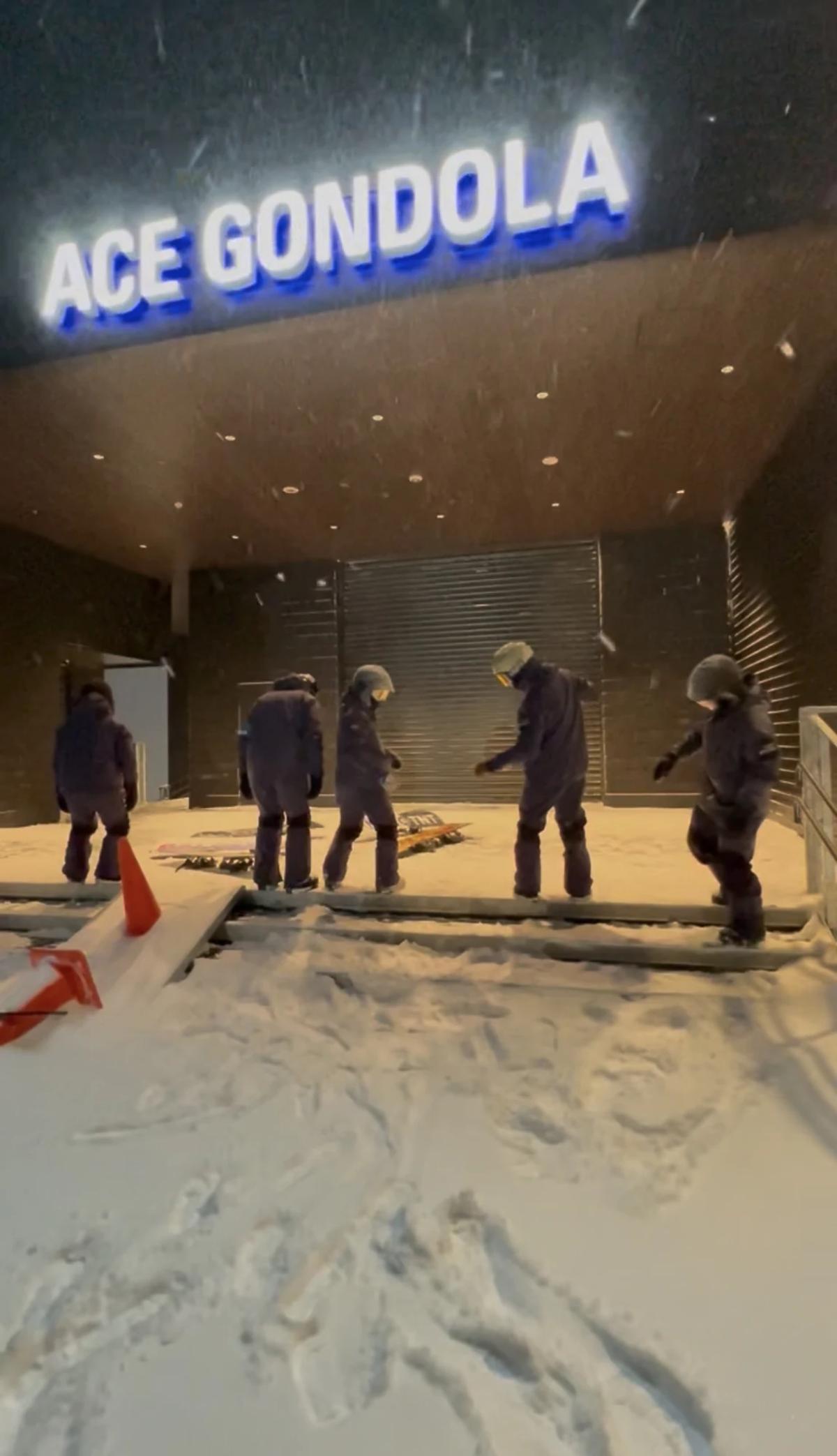
Four lifts run during the night-skiing session at Hirafu:
| Lift | Type |
|---|---|
| Ace Gondola | TypeGondola cabin (enclosed) |
| Ace Family | TypeOpen chairlift (no bubble) |
| King Gondola | TypeGondola cabin (enclosed) |
| King Holiday Pair | TypeOpen chairlift (no bubble) |
The type of lift matters at night. The two open chairlifts feel noticeably cold after dark. Those few minutes going up have no shelter at all. If you feel the cold, stick to the two enclosed gondolas.
Which runs each lift leads to, how the routes link up and how to read the junctions are covered in a separate full trail guide, linked at the end of this article.
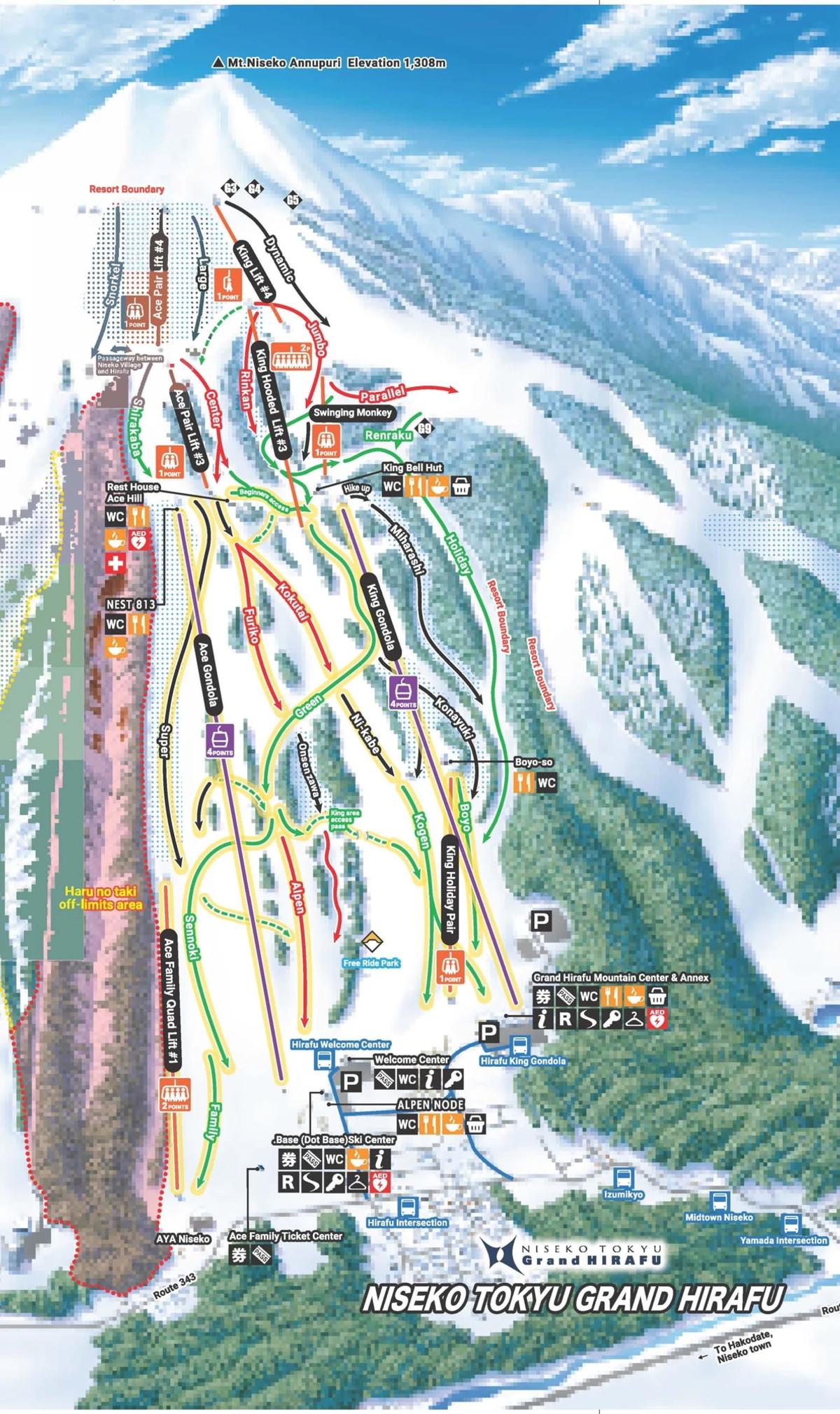
Runs closed during night skiing
- Miharashi
- Holiday
- Konayuki
- Onsenzawa
Leave these four out when you plan a route. Don't follow your daytime habits.
2. How to work out which runs will be open tonight
This is the most useful trick here, and it works at any resort on any day.
Look at which lifts are running, and you know which runs will be open.
Resorts don't post the status of every single run, but they always post which lifts are running. And the runs are strung together by the lifts, so if a lift isn't turning, you simply can't reach the runs on that side.
So the lift status alone tells you the terrain available tonight. That's more reliable than guessing from run notices, and you don't have to get up the mountain to discover a route is closed.
3. Night snow is better than you think
A lot of people assume night snow is poor. That's a misconception.
What FUYU coaches actually see is this: as long as it snowed that day and the wind is light, the snow at night is usually good. The reason is simple: there are fewer people at night, so the snow hasn't been skied out.
The best daytime powder turns into churned-up chunks once a few hundred people have been through it. On the same run at night, far fewer people have skied it, so the surface is actually more intact.
Visibility is better than most people expect
The resort turns the lights on, and the coverage is enough. Sometimes it's actually clearer than in daylight, because under thick cloud the snow and the sky are both grey-white, which makes the bumps and dips harder to read.
The view you only get at Hirafu
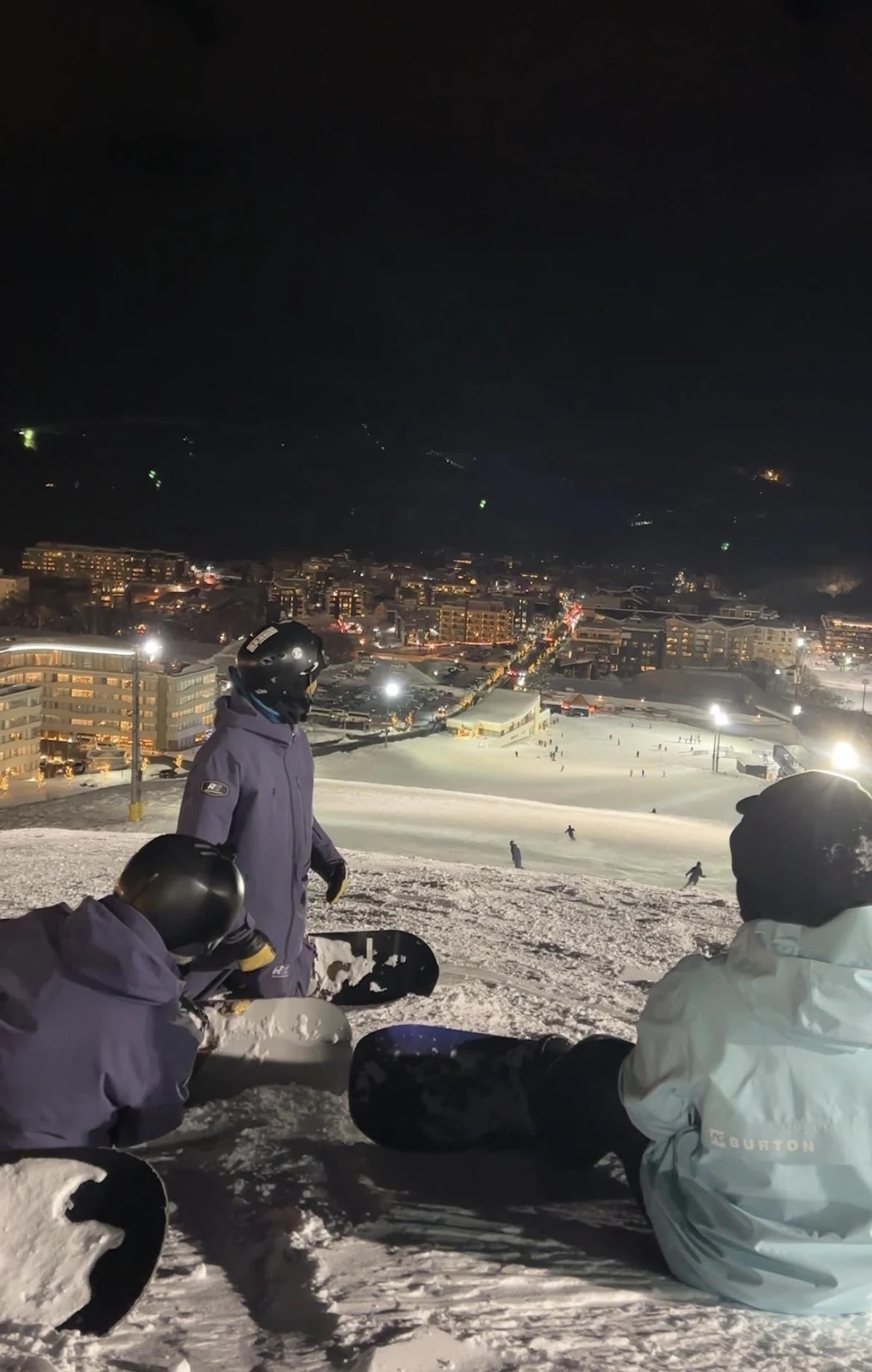
Hirafu is the largest night-skiing resort in Japan. With the lights of the hotel village below, on a clear evening the view is something you can't see during the day.
4. Three things that catch people out
1. Colder than you expect
The swing between daytime and evening temperatures is large. What felt right in the afternoon won't be enough after dark. Bring an extra layer, or just dress warmer before you head up.
This is directly tied to the type of lift. Ace Family and King Holiday Pair are open chairlifts with no bubble, and riding them at night feels very different.
2. Some riders move very fast at night
With fewer people and empty runs, some riders go extremely fast. Pay extra attention to what's around you at night, especially at junctions and blind spots.
By the same logic, don't sit at the side of a run or anywhere hidden from view from above. People coming down can't see you, and that's where collisions happen most.
3. The restaurants may be closed by the time you finish
Night skiing ends at 19:00, and by then many restaurants have closed or are closing. If you plan to eat after skiing, check the opening hours first, or book a table.
5. Rental hours need special attention
| Situation | Closing time |
|---|---|
| On night-skiing days | Closing time19:30 |
| When there is no night skiing | Closing time17:00 |
The gap is large. On a night-skiing day you have only 30 minutes between the end of the session and handing your gear back. When there is no night skiing the shop closes two and a half hours earlier, and planning your day around night-skiing hours means you won't make it.
Check whether night skiing is running that day before you set out. It shapes your whole schedule.
Related: Rent or buy ski gear? Buying order, goggles, helmets and board length
6. A coach's view: how an evening lesson differs from a daytime one
An evening lesson carries less pressure. During the day the runs are busy and beginners get tense, worried about blocking people, worried about being hit. At night there are far fewer people, and that pressure drops noticeably.
And fear is the biggest obstacle in the beginner stage, bigger than any technical problem.
There's more room, too. On the same run, the lateral space you can use at night is far greater, so you're not constantly dodging people while working on turns and speed control.
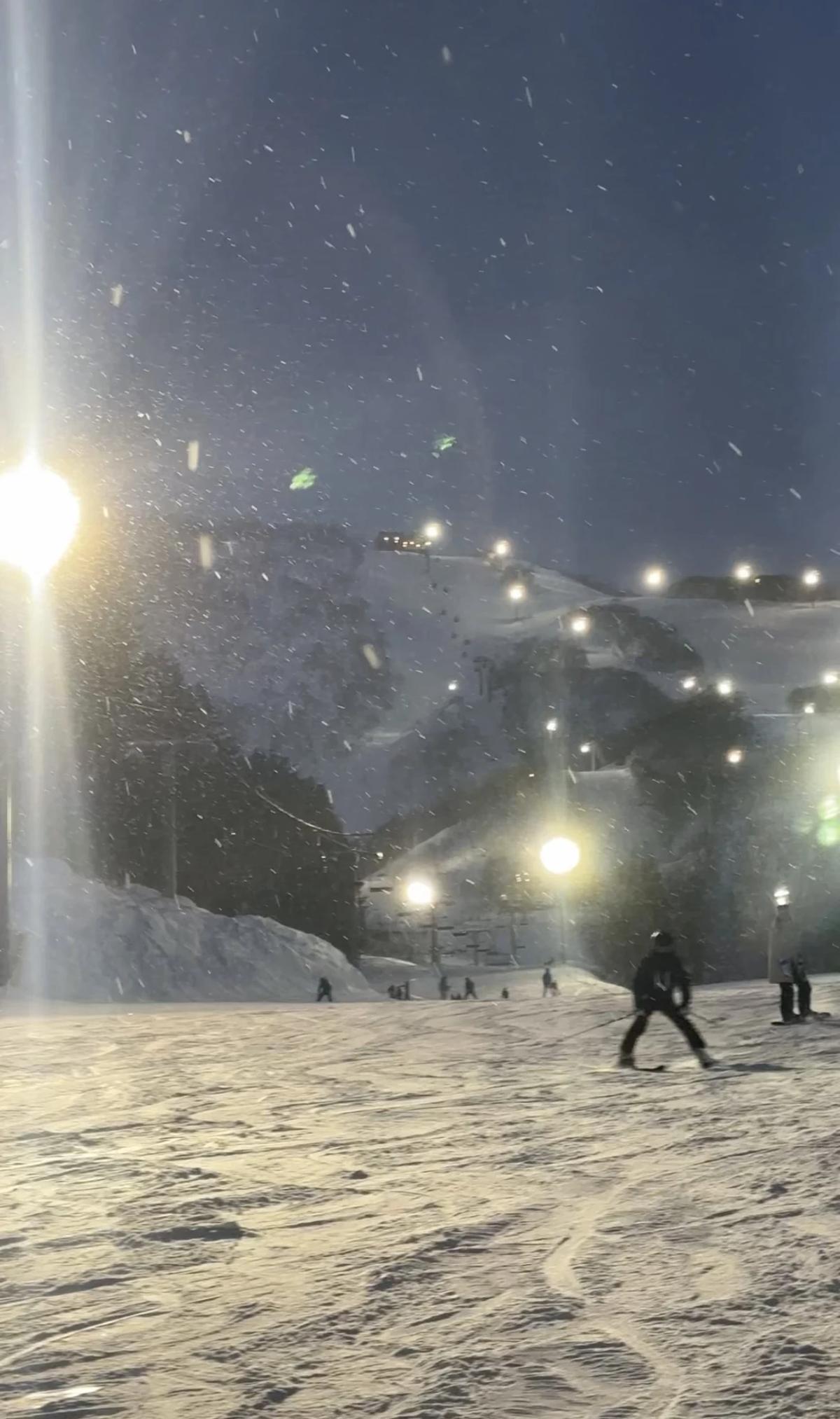
So as long as you stay safe, you can actually work on more in an evening session.
The one variable is the weather. Conditions during the night session tend to be less stable. But if you're already here and the day looks good, FUYU coaches strongly recommend trying it at least once.
This article comes from the FUYU SKI coaching team's own teaching experience at Grand Hirafu in Niseko. Lift operations and opening hours can change from year to year and from day to day, so please check the resort's announcements on the day before you set out.