Do you need a ski instructor for your first time? Yes, with three exceptions
First time on snow: yes, and book at least two full days. Already riding: it depends on what you want to work on and where you are stuck. What trips people up on day one, three situations where you can skip a coach, and four where one helps.
First time on snow: yes, and book at least two full days.
Already riding: it depends on what you want to work on this trip and where you are stuck.
Day one has a very concrete list: getting the gear on, moving with one foot free, riding the lift. Then heelside pushing and falling leaf on a snowboard, or wedge speed control and wedge turns on skis. Working that out alone often means spending the whole day stuck on step one. With a coach, day one already gets you on and off the lift by yourself and controlling speed and direction, and more importantly the whole thing stops feeling unfamiliar. Your coach will set up plenty of drills for you to finish alone, so by the end of the lesson you can already feel what riding on your own is like.
If you are already riding, here are three situations where we would tell you not to bother.
What trips people up on day one
The two hardest things on a snowboard: standing up with both feet strapped in, which takes core strength and a feel for heelside balance; and getting off the lift, where the timing is hard to catch and the board will not run straight out of the station.
The two hardest things on skis: the wedge stop, where tensing up pinches the knees together and no amount of effort slows you down, because the problem is the angle of the skis rather than strength; and the length of the skis, which does not feel like walking and tends to catch on you.
These are all things a coach names in one sentence and you could spend half a day on alone.
Three questions to ask yourself first
1. How many days are you skiing?
With only half a day or one day, and other plans in the trip, there may not be enough time to support a full lesson.
2. Where are you stuck right now?
Some people cannot ride at all, some can ride but cannot get past one movement, some are fine and just want to play. Those three need different things.
3. How is your budget split?
A ski trip costs flights, accommodation, lift passes, rental and lessons. With a fixed total, where the money works hardest is a different answer for everyone.
Once you have thought those through, the rest of this will be easier to place yourself in.
Three situations where you may not need a coach
If you have skied a few times but are still not steady, we usually suggest riding on your own for a while first. A lot of habits only settle through your own mileage, and getting past the mental side first makes lessons pay off faster.
1. You already have a clear thing to practise
If you know what you want to work on and how to work on it, what you need is time and mileage, not a coach.
Just finishing a stage of lessons counts here too. Drilling what you covered until it sticks usually makes the next lesson land better.
How to tell if this is you: can you say what you want to practise this time, and why. If you can, you probably already have a direction.
2. You want to explore terrain, not practise
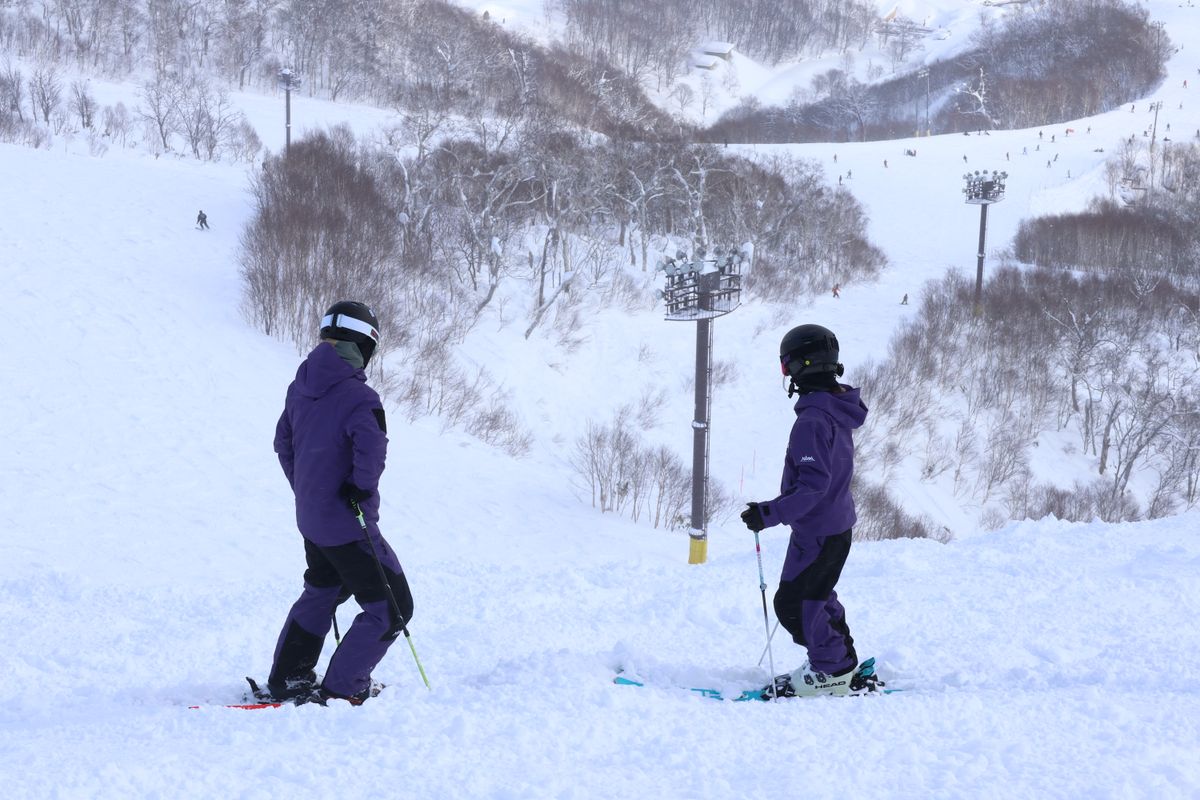
Some people are here to ride powder and get into the trees, not to work on technique.
Booking a lesson for that tends to leave both sides uneasy. You feel like you are being taught the whole time, and the coach feels you do not want to learn.
That does not mean figuring it out alone is the only option.
A lesson teaches you movement; a guide takes you places. On a guiding day nobody corrects your posture unless you ask.
We built the guiding programme to shorten the distance between an ordinary rider and off-piste. Most people assume powder is beyond them, so they never try. By watching the mountain ourselves and spending the time to find the right spots, we match terrain to the level of the rider. Powder is not only for experts; different levels simply have different terrain to go to.
Where a guided day goes comes down to five things: the weather, where your riding is at, your board type, your fitness, and the snow.
3. No time, and you just want to relax
If you only have half a day free, or skiing is not the point of the trip, keeping that time for yourself is a fair choice.
Not every ski trip has to be about getting better.
Four situations where a coach does help
1. Your first time on snow
The common problem with working it out alone is not slow progress. It is drilling the wrong movement until it sticks.
When people are scared they follow instinct and do whatever feels safest. Sometimes that is the opposite of the correct movement. At low speed it may not show; at speed it tends to.
Once a movement has set, undoing it usually takes longer than learning it fresh.
How to tell whether you need help: can you find teaching material online that suits you, understand it, and produce it. Some people can; some need someone demonstrating beside them.
2. You can ride, but one movement will not come
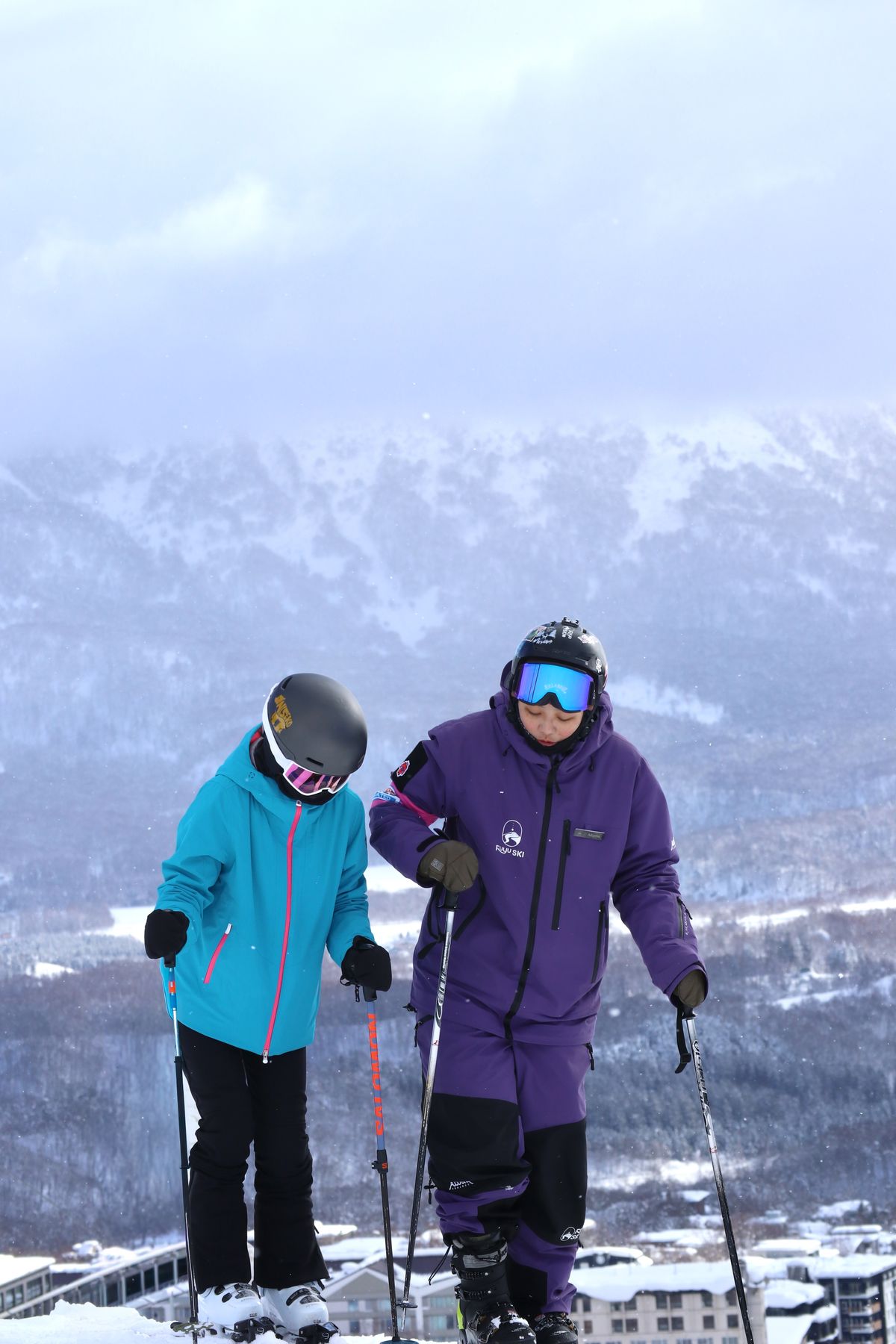
When you are stuck, drilling the same movement sometimes does nothing, because you may not be able to see what you are actually doing.
This is where someone watching from the side helps. Once you know what to change, the practice afterwards is practice that counts.
Concept versus technique in skiing
3. You have children with you
Hand the children to a coach and the adults finally get to ride properly.
Children also need teaching that is not quite what adults need. Our 3 to 7 class is one to one, run through games rather than heavy explanation, with support on speed control and the lift throughout.
We have taken a 5 year old into powder, and a 12 year old onto steeps.
4. You want to try something with risk in it
Park, speed, trees: each comes with safety knowledge attached.
You can work it out alone, but the price of working it out can be an injury.
If you decide to book, check three things first
Deciding to book is only the first step. Whether it works comes down to how you communicate what you need.
1. Check how coaches are assigned
The most decorated coach is not automatically right for you. Make sure what you need is actually heard.
When booking, it is fair to ask: how will they teach, how would they approach your situation, and what is their style (more explanation, more demonstration, or more riding).
Technical Directors do have more teaching and more experience behind them. If you are working on a high-difficulty technique and want to break through, book a Technical Director directly.
If you are working on fundamentals, any of our coaches can deliver that stage well. Before booking, talk to our team about what you want: your goal for the lesson, how you want to be taught, and any past experience, good or bad, since that helps us understand you faster.
We will match you with the coach who fits.
2. Check whether the coaches teach the same way
A school has many coaches. If each one says something different, changing coach can mean starting over.
FUYU's coaches all use the same MA system to watch your riding. MA is movement analysis: one shared method for breaking down what is going wrong.
Our Technical Directors run internal training four days a week, putting their experience and teaching approach into words and then into the lesson. Student feedback goes straight back into the next session.
3. Check whether you leave with something
Riding it on the day does not mean remembering it at home.
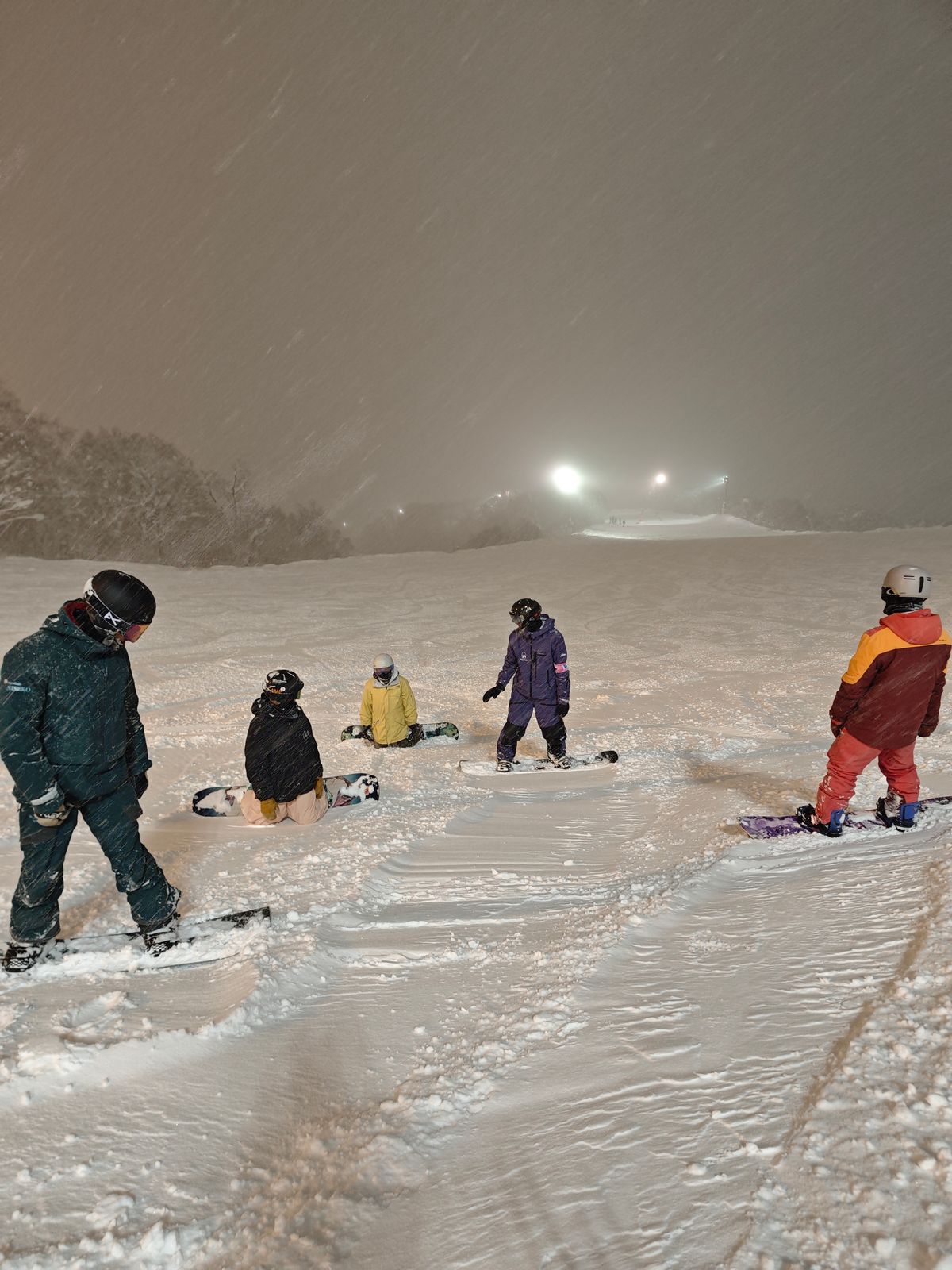
FUYU sends lesson notes after every lesson, recording where you got to and what to work on next.
Still not sure
If you have decided to book, the next question is usually how many days.
How many lessons does a beginner need?
How many days do you need to ski in Hokkaido?
Skis or snowboard? How to choose for your first time
If you are not sure where your riding is at, take the quiz. Five questions, two minutes, and it tells you what to work on next and which lesson suits.
Next Steps
Find your exact level
Five questions, two minutes. The results page matches you to a stage.
How FUYU teaches this stage
See our courses page and find the category that matches your level.
Talk to us
Send your request and our team will help you sort out the details.