Choosing a Snowboard Boot Lacing System: Why I Wouldn't Recommend Single BOA for Your First Pair
What's the real difference between double BOA, Speed Lace and traditional laces? FUYU founder Brian compares them on ease of use, effort required, and zonal adjustment, and explains why a freshly-tightened BOA can feel loose again minutes later.
by FUYU founder Brian
FUYU coaches recommend double BOA for your first pair of snowboard boots: it is simple to operate, doesn't take much effort, and still lets you adjust tightness by zone. Single BOA can't adjust the instep, ankle and lower leg separately, so unless your budget is tight or it fits exceptionally well when you try it on, it isn't the one to start with.
Last updated: 22 October 2026 | 26-27 season
Last time we covered boot soles and safety. This post covers another question a lot of people run into when buying boots:
"What's actually the difference between BOA, double BOA, Speed Lace, and traditional laces?"
Short answer first. If I had to sort it simply, here's how I'd suggest thinking about it:
Quick Recommendation
If I had to sort it simply, here's how I'd suggest thinking about it:
Want it easy, low-effort, quick on and off→ Double BOA
Have decent grip strength, want it to stay locked in once tightened→ Speed Lace
Know exactly what you need, care about fine adjustment→ Traditional laces
Single BOA→ unless your budget is tight, or it fits exceptionally well when you try it on, I wouldn't make it your first choice
None of these lacing systems is objectively "better". They mainly differ in:
| System | On and off | Effort to tighten | Zone adjustment | Loosening while riding |
|---|---|---|---|---|
| Single BOA | On and offEasy | Effort to tightenNot much effort | Zone adjustmentNo: one dial tightens instep, ankle and lower leg together | Loosening while ridingRight after tightening the cable is still settling, so it may feel loose after you move; give the dial another turn |
| Double BOA | On and offQuick | Effort to tightenNot much effort | Zone adjustmentYes: upper and lower sections separately | Loosening while ridingRight after tightening the cable is still settling, so it may feel loose after you move; give the dial another turn |
| Speed Lace | On and offTightens fast | Effort to tightenTakes some arm strength and grip | Zone adjustmentUsually upper and lower separately | Loosening while ridingLess prone to loosening from movement once secured |
| Traditional laces | On and offTakes time | Effort to tightenA fair amount of effort | Zone adjustmentEvery point along the boot | Loosening while ridingWithout much lacing experience, they can gradually loosen while riding |
Different brands also implement these differently, but if you're choosing your first pair of boots, here's a good place to start.
Single BOA: convenient, but limited adjustment
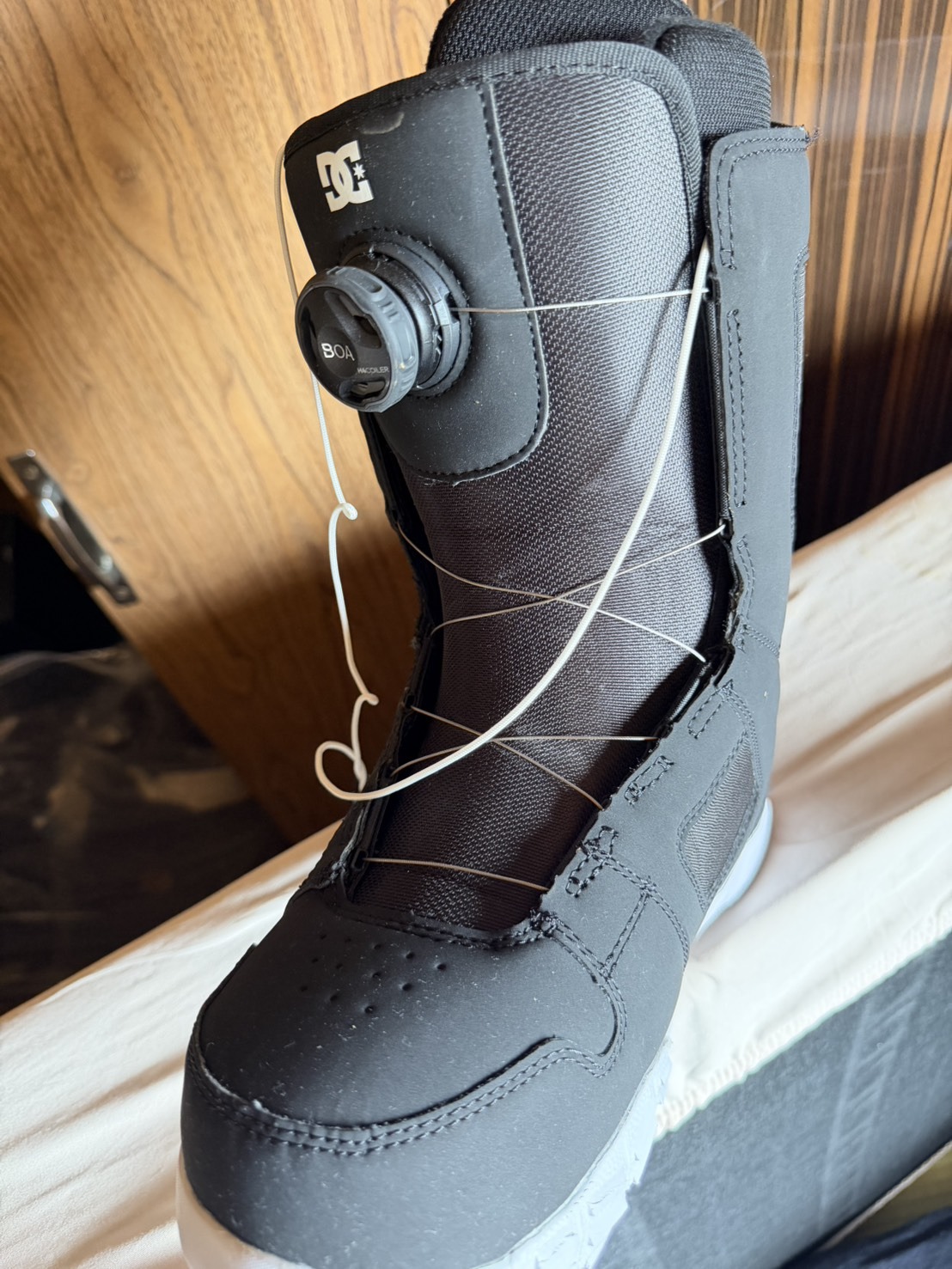
Single BOA usually only needs one dial turned to tighten the entire boot.
It's easy to put on and take off, and doesn't take much effort, so for someone new to boots, it can look like the simplest option.
But its biggest problem is: you can't separately adjust the tightness across the instep, ankle and lower leg.
For example, if your ankle isn't tight enough yet and you keep turning the dial, your instep and lower leg tighten along with it. Sometimes the ankle still isn't locked in while everything else already feels uncomfortably compressed.
Everyone's foot shape is different, and so is where they need to be locked down. Single BOA gives you limited room to adjust for that, so personally, if budget allows, I wouldn't make it my first choice.
Double BOA: easy, and zone-adjustable
Double BOA has two dials, usually controlling the upper and lower parts of the boot separately.
The setup varies a bit by brand, but the basic idea is the same: it lets you adjust the tightness around the lower leg, ankle and instep independently, based on your own foot shape and preference.
If your instep feels compressed, you can loosen the lower dial a bit; if you want your ankle locked in more firmly, you can tighten just that area.
It's simple to operate, doesn't take much effort, and is quick to put on and take off. So for anyone who wants ease of use while still keeping some room to adjust, I'd generally recommend double BOA.
One thing worth knowing about BOA
More and more brands are releasing BOA boots these days. There's nothing wrong with BOA itself. You just need to understand its behavior before using it.
Right after you tighten the BOA, the cable isn't necessarily fully settled against the boot's upper yet. Once you move around and flex your ankle a bit, the cable gradually shifts into the correct position, and at that point the boot might feel like it's loosened.
That doesn't necessarily mean the BOA has come loose. Most of the time, the cable and upper have simply resettled. Just give the dial another turn to retighten it.
So after putting on BOA boots, I'll usually flex my ankle or walk a few steps first, then check the tightness again.
Speed Lace: direct hold, but takes some grip strength
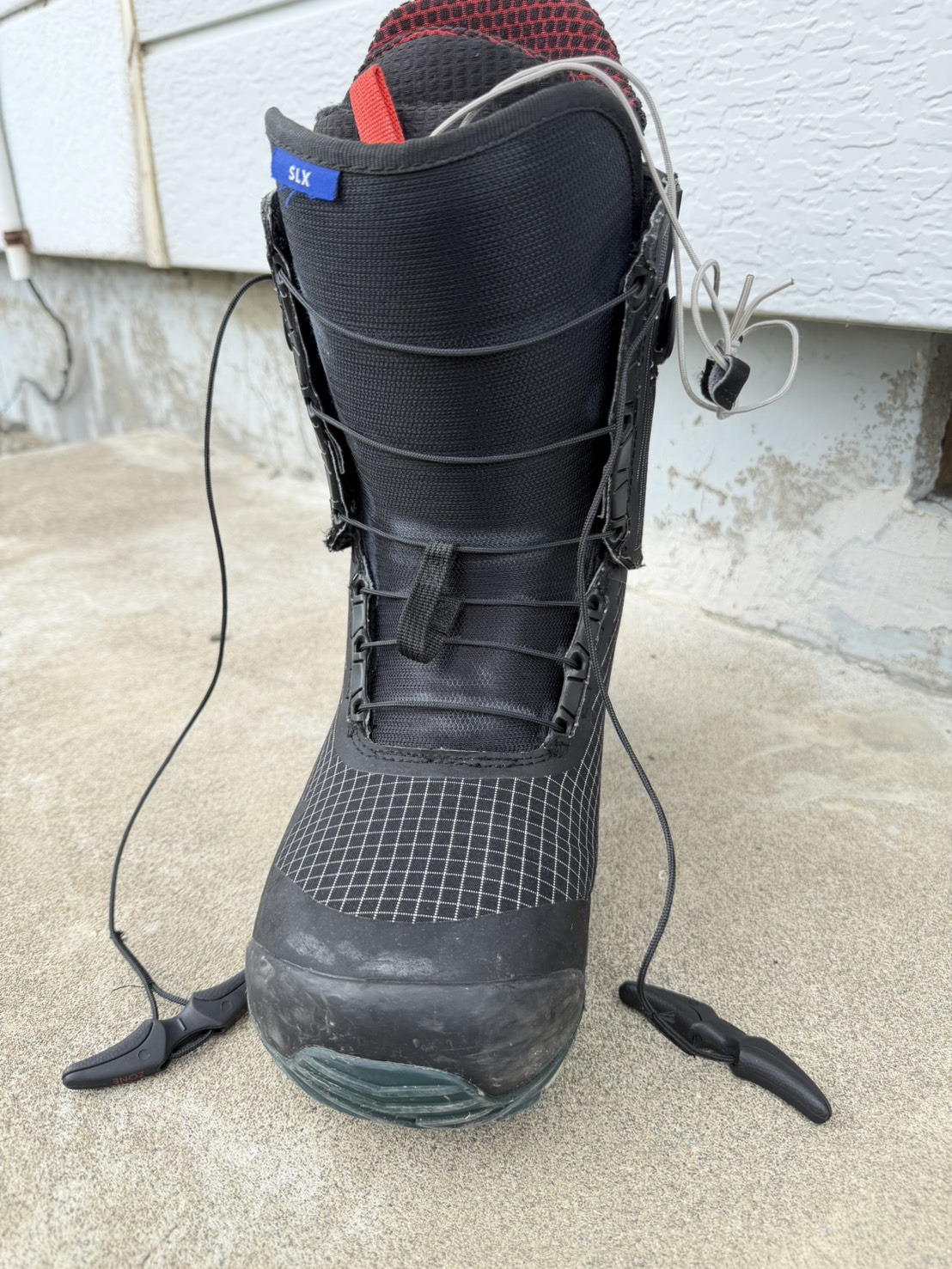
Speed Lace tightens the boot with a quick-pull cord system, and usually also lets you adjust the upper and lower sections separately.
Its advantage is that it tightens fast, holds directly and firmly, and once secured, it's less prone to gradually loosening from movement.
But Speed Lace needs you to pull the cord tight by hand, so it does require a certain amount of arm strength and grip.
If you don't pull it tight enough, or don't lock the cord into the correct catch, you might end up with insufficient support. For people with smaller hands, weaker grip, or who aren't used to exerting force, it can feel like more work to use.
If you naturally have decent strength and care a lot about how stable your boots feel once locked in, I'd personally recommend Speed Lace.
Traditional laces: full freedom, but the most effort and time
Traditional laces work much like lacing a regular shoe, so you can adjust the tightness at every point exactly to your needs.
Some people say traditional laces are the best option, precisely because they give you the most freedom to adjust. You control exactly which section is tighter and which is looser. And if the laces themselves ever wear out, they're easy and cheap to replace.
But the downsides are just as clear.
Properly lacing a boot from bottom to top takes time and a fair amount of effort. Especially in cold conditions, where wearing gloves makes it awkward and taking them off is freezing. In practice, it's less effortless than it sounds.
If you don't have much experience lacing boots, you might also end up with the bottom too tight and the top not tight enough, or find the laces gradually loosening after a while of riding.
There's nothing wrong with traditional laces. In my own experience, they're best suited to people who know exactly what kind of hold they want and are willing to spend the time adjusting, and not necessarily the best fit for someone buying their very first pair.
When trying boots on, don't just stand there
For most people buying boots for the first time, I think double BOA is the relatively easiest option to use. If you have decent strength and don't mind pulling a bit extra each time you put your boots on, Speed Lace's hold and stability will suit my personal preference more.
Whichever you choose, don't just stand there in the shop after putting them on and call it done.
Once the boot is laced up, bend your knees slightly and flex your ankle forward and back to simulate riding movements, then check the tightness again.
What you should be checking isn't "can I make it really tight". It's:
Once tightened, is your ankle held stable without your instep, lower leg or toes feeling obviously compressed?
A Note From FUYU
Boots aren't better the tighter you lace them.
Too loose and your foot shifts around inside the boot, hurting control; too tight and you risk numbness, pain, or interference with your movements while riding.
If your ankle feels like it's lifting once the boot's on, it might not just be the lacing. It could also come down to boot size, last shape, or liner fit. So lacing is only one part of choosing boots; it still needs to be judged together with your own foot shape and how it actually feels when you try them on.
→ Not sure what level you're at? Take our 2-minute quiz
Boot Series
- Sole material & safety
- BOA, double BOA, Speed Lace and laces compared (this post)
- How to choose boot stiffness (flex)
- How to check boot fit and sizing