Why Is Niseko's Snow So Special? Three Ways Coaches Read the Day's Conditions
What Japow means, why Niseko snow holds so little moisture, and the three things coaches actually check each morning: wind, lift lines and last night’s snowfall.
Niseko's snow is special because it holds so little moisture: cold Siberian air picks up moisture over the Sea of Japan, is lifted by Hokkaido's terrain, and drops large amounts of very dry snow on the mountains. FUYU coaches read the day's conditions each morning from three things: the wind, the lift lines, and last night's snow in open ground.
Last updated: 22 October 2026 | 26-27 season
The short answer
Japow is Japanese powderExtremely low moisture, so the snow sprays straight up as the board pushes through
Read the windWind strips snow off the windward side and piles it on the lee; go where it took the snow
Read the lift linesThe longest queue usually points at the best snow that day
Read last night's snowfallLook at untouched open ground, not the groomed runs
What decides your day is whether it has been skied outA few dozen passes turn powder into churned-up chunks
Niseko's snow is light and dry, with almost no moisture in it, and it sprays up as you ride. That is most people's first impression, and it is where the word "Japow" comes from.
But good snow quality does not mean you will ride good snow every day.
Same day, same mountain: going to the right place and the wrong place are completely different experiences. Plenty of people research the best months, pick the weeks with the most powder, fly over, and still have a day where they think "this isn't what I pictured". The problem is usually not that day's snowfall. It is where the wind put the snow, and whether someone else got to it first.
What follows is what our coaches actually look at every morning. Not meteorology, but the three things you use to decide, standing at the base, where to take your students today.
| Method | What to look at | How to read it |
|---|---|---|
| Wind | What to look atWhether it blew hard the day before | How to read itWindward areas will be short on snow; head to the lee, where the wind took it |
| Lift lines | What to look atWhich lift has the longest queue | How to read itUsually the best snow; a very long queue means it will be skied out fast, so get ahead of the crowd or go the other way |
| Last night's snow | What to look atUntouched snow at the car park edge, by buildings, on fences | How to read itIf it is stacking up, there will be plenty of fresh powder on the mountain today |
1. Read the Wind
Wind is the least-noticed variable and the one with the most direct effect.
Fresh snow does not stay evenly spread across the mountain. Wind strips it off the windward side and piles it on the lee. So after a single storm, some zones are absurdly deep and others have been blown dry and thin.
If it blew hard the day before, there is still powder overall the next day, but the windward areas are noticeably short on snow. Follow your usual route at that point and you will conclude "the snow isn't great today", when in fact you just went to the wrong side.
What you are judging is: where did the wind take the snow, and then go that way.
This is also why a snowfall number cannot be read on its own. Twenty centimetres of new snow, if all of it gets blown to one side, might be forty on that side and almost nothing on the other.
2. Read the Lift Lines
This is the most direct signal, and the easiest to overlook.
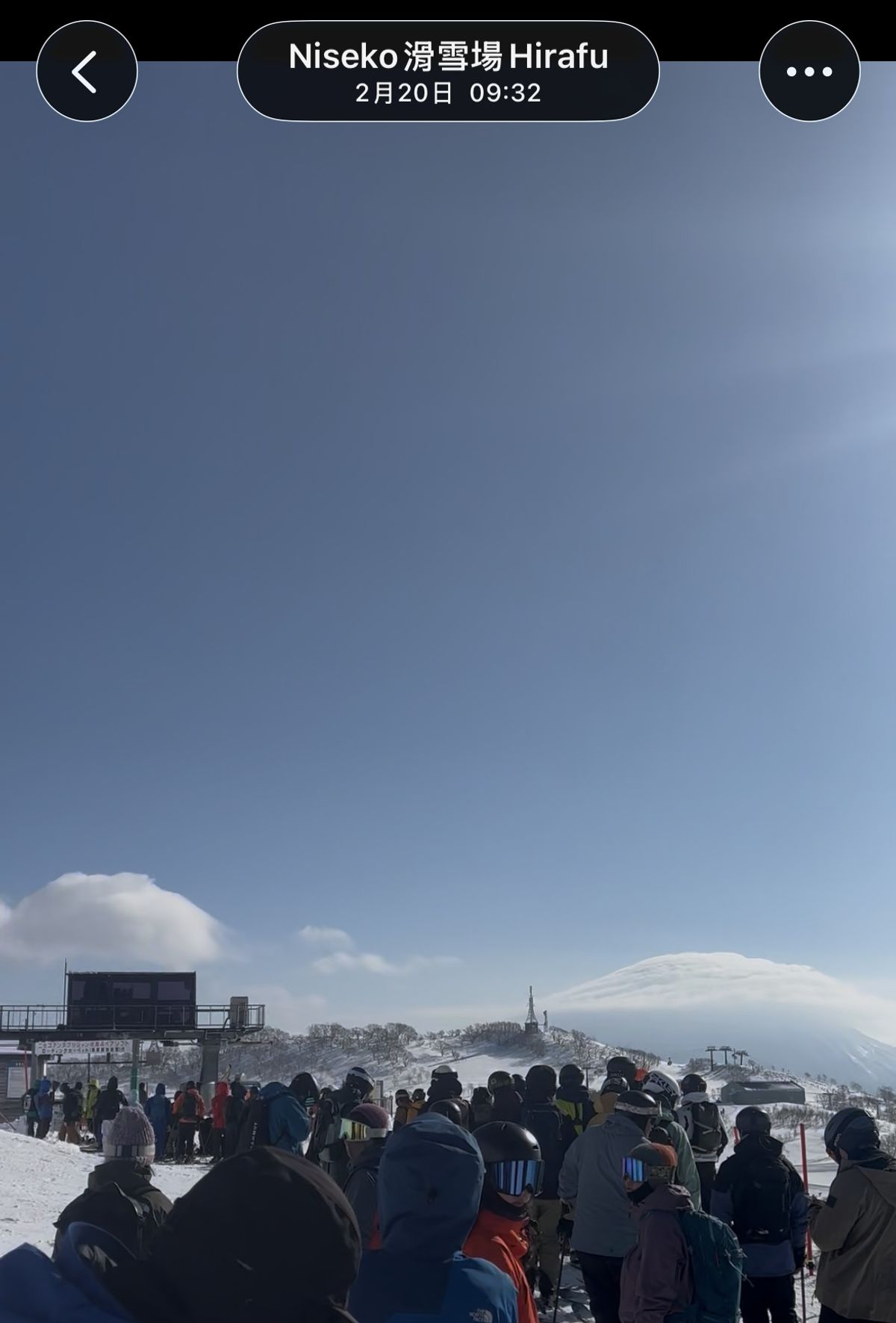
People will tell you the answer with their feet. Whichever lift has the longest queue is usually pointing at the best snow that day. Anyone who has ridden here a few seasons does not look anything up. They read the lines and know where to go.
But this method has a prerequisite: you have to know what the options are.
If you only know three runs, all a queue tells you is which of those three to pick. That is exactly where local knowledge pays: knowing the alternative that has a shorter line and snow just as good.
Lift lines also have an inverse use. If one direction has an unusually long queue, the snow over there will get skied out fast. Sometimes the right call is not to follow, but to get there ahead of the crowd, or simply go the other way.
3. Read Last Night's Snowfall
Look at how deep the snow is in open ground.
Not on the runs. Those get groomed, so they tell you nothing about actual snowfall. Look at ground nobody has touched: the edge of the car park, alongside buildings, on top of fences.
If it is stacking up, enough fell overnight and there will be plenty of fresh powder on the mountain today.
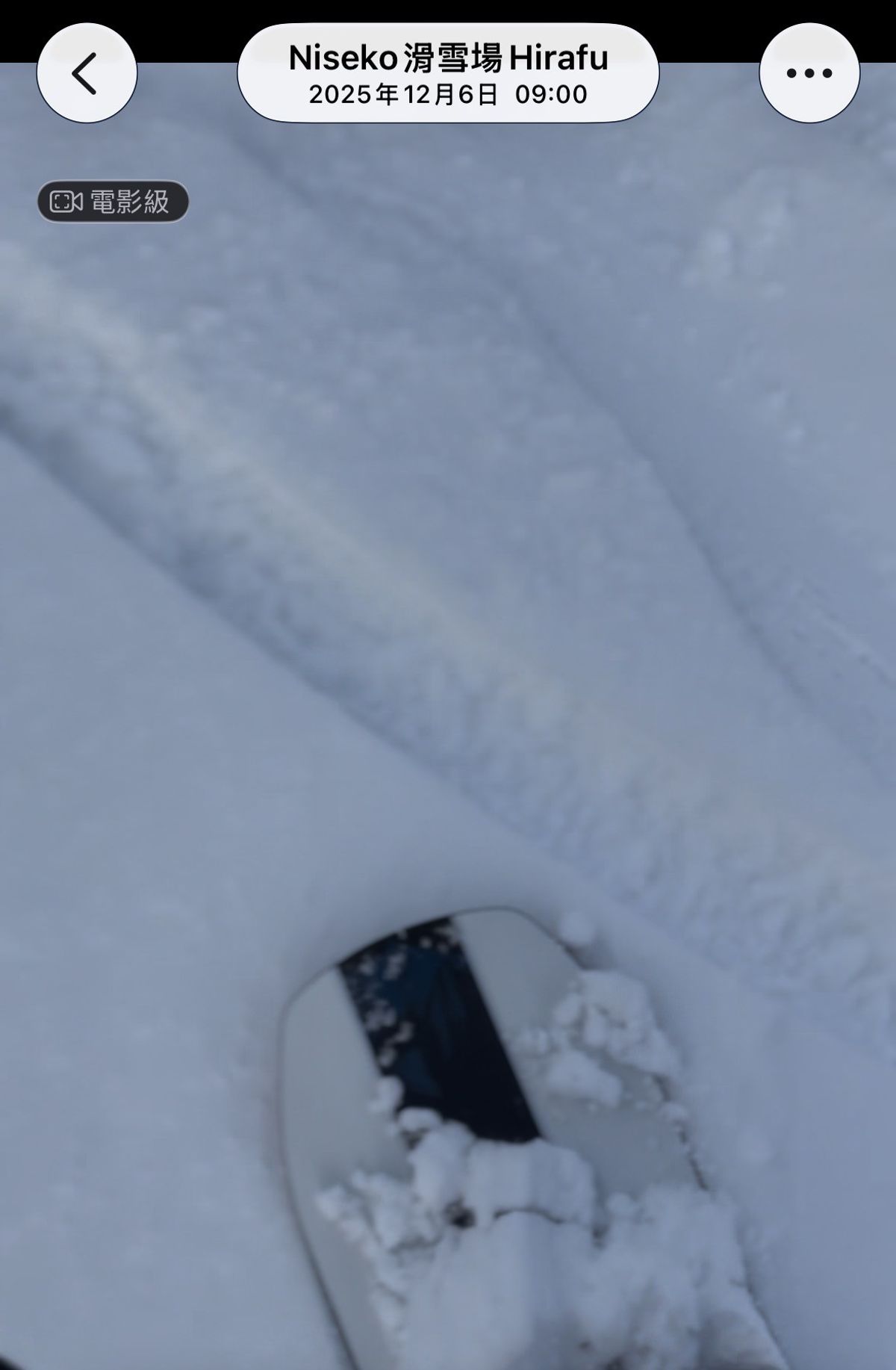
The advantage of this one is that you do not have to wait until you are up the hill. A glance before you leave in the morning already sets your expectations for the day.
But What Really Decides Your Day Is Whether It Has Been Skied Out
All three of the above are ways of judging the state of the snow. In practice, though, the most common reason people come away disappointed is not that the snow was bad. It is that someone else already rode it.
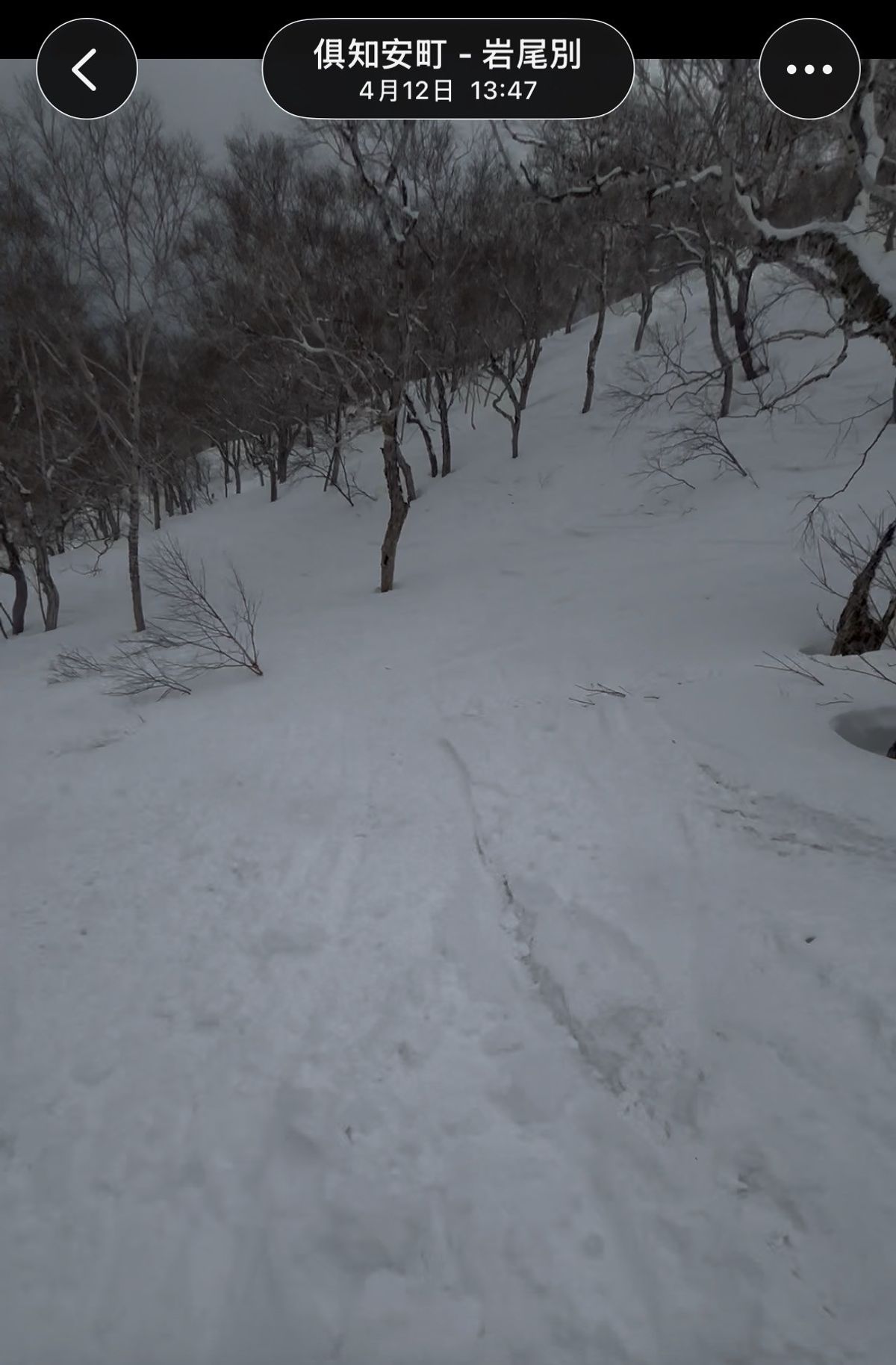
If you arrive somewhere and it is full of people, even great snow will not last. Once powder has been ridden a few dozen times it turns into churned-up chunks, and it feels like a different surface entirely.
So what you are really judging is a combination of three things:
- The state of the snow (wind, snowfall)
- Where the crowd is heading (lift lines)
- Which routes you have available to choose from
The third is where the gap is widest. The first two you can learn by paying attention. The third takes time to accumulate.
What Japow Means
Japow is a portmanteau of Japan and Powder, meaning Japanese powder snow.
The term is used widely in international skiing because Japanese powder has one property that is very hard to replicate elsewhere: extremely low moisture content.
How wet or dry the snow is determines how it feels to ride. Wetter snow is heavier and stickier and drags; drier snow is very light, and the board pushing through it sends it spraying straight up.
Hokkaido produces this kind of snow consistently because of where it sits. Cold air from Siberia picks up moisture crossing the Sea of Japan, hits Hokkaido's terrain, gets lifted, and drops large amounts of very dry snow over the mountains. This repeats all winter, so it is not something you occasionally catch. It is the norm.
Niseko sits on that path, and with Mount Yotei's terrain alongside it, is one of the areas where the effect is most pronounced.
Related: When Does It Snow in Hokkaido? First Snow in October, Skiing From About December
Why Niseko in Particular Rewards This Approach
Back to the opening question: Niseko's snow quality genuinely is good: light, dry, and it sprays.
But what actually makes Niseko hold your interest is not the snow quality. It is how much terrain there is to choose from.
There is an enormous amount of skiable ground, enough that it is hard to get bored. We have coaches who have ridden here for four years and still have not.
That cuts both ways. More terrain means more options, and on any given day there is always somewhere that has not been skied out. But it also means if you do not know the mountain, it is very easy to circle the same zone all day and assume that is all there is.
Put differently, Niseko is the kind of resort where knowing where to go is worth an unusual amount. On a simple mountain it barely matters where you ride. At Niseko it does.
If You Only Have a Few Days
Most people come to Niseko for three to five days, without the time to feel out the terrain slowly.
In that situation, the ability to read conditions becomes something that directly shapes your trip. Same three days: one person leaves satisfied, another thinks it was "fine", and the difference is usually not technique. It is which way they went each morning.
This is also what our coaches are doing beyond teaching technique: deciding, based on the day's snow and crowds, where to take you.
This article draws on the FUYU SKI coaching team's day-to-day teaching experience at Niseko, Rusutsu and Kiroro. Reading conditions still depends on the weather on the day, so always go by what you find on the mountain.