What Age Can Kids Start Skiing in Hokkaido? From Age 3, With Conditions
Kids can start skiing as young as 3! A FUYU coach breaks down the right age, skis vs. snowboard, how to choose gear, and how children's lessons actually work in Niseko, all in one place.
Kids can start skiing from age 3. FUYU coaches suggest children aged 3 to 7 start on skis: they are more intuitive to control and quicker to pick up, so kids are less likely to lose interest to frustration, and getting on and off lifts or back up after a fall is easier to do on their own.
Last updated: 22 October 2026 | 26-27 season
The 30-second version: what to know before taking kids skiing
What age can they start?From 3. For ages 3–7 we suggest starting on skis: quicker to pick up, and less discouraging
Where does the gear go wrong?Glove fit and boot buckles. Getting them on and off takes patience and guidance
What matters most?Building trust comes before teaching technique. A lesson in the child's own language makes it far less strange
Below: how our coaches actually run these lessons, and the gear details.
Family ski trips to Hokkaido have become more and more popular in recent years. If you're looking for a sport the whole family can do together, skiing is hard to beat.
Planning for three generations? Can older adults learn to ski
When it comes to taking kids to learn skiing in Niseko, most parents' first questions are: What age can they start? Should we look for a Chinese-speaking coach? What do we need to prepare?
This article draws on real teaching experience from FUYU coaches to answer all of these questions clearly.
What Are the Benefits of Skiing for Kids?
Skiing helps adults learn to use their muscles and joints to control speed, direction, and even fear. Kids, though, can't necessarily control those muscles with the same precision, so for them the learning process looks more like "exploration."
In the early lessons of a children's ski course, we focus on "speed" and "choosing direction," helping kids build judgment, a sense of exploration, observation skills, and focus. Put simply, the first goal is just to help them accept and get comfortable with the whole experience.
Just like with any new experience, the learning journey for kids follows the same arc: exposure → exploration → trust → full engagement.
What Does the Research Say?
Research shows skiing significantly improves children's balance, since they have to continuously balance on snow, which strengthens their legs and core. These benefits aren't limited to the slopes. They carry over into everyday life and performance in other sports.
Danish researchers found that incorporating movement into the learning process effectively boosts children's academic performance. As the researchers put it: "When children can move and learn with their whole body, they learn more."
A study on adolescents found that eight weeks of consistent ski training had a positive effect on reaction time, selective attention, and academic performance. The researchers recommended that parents encourage their children to take up sports involving complex motor skills, like skiing.
Research also points to skiing helping children build independence and a sense of responsibility. On the slopes, they learn to make decisions, solve problems, and push through challenges, which builds stronger confidence in other areas of life too.
Skiing is a sport that rewards practice and repetition, and the sense of accomplishment once you get it is huge. (If you ski yourself, you already know exactly what this feels like.)
Going from something unfamiliar and a little frightening to something you can control with ease. That kind of achievement is hard to replicate anywhere else.
What Age Can They Start, and Which Type of Skis?
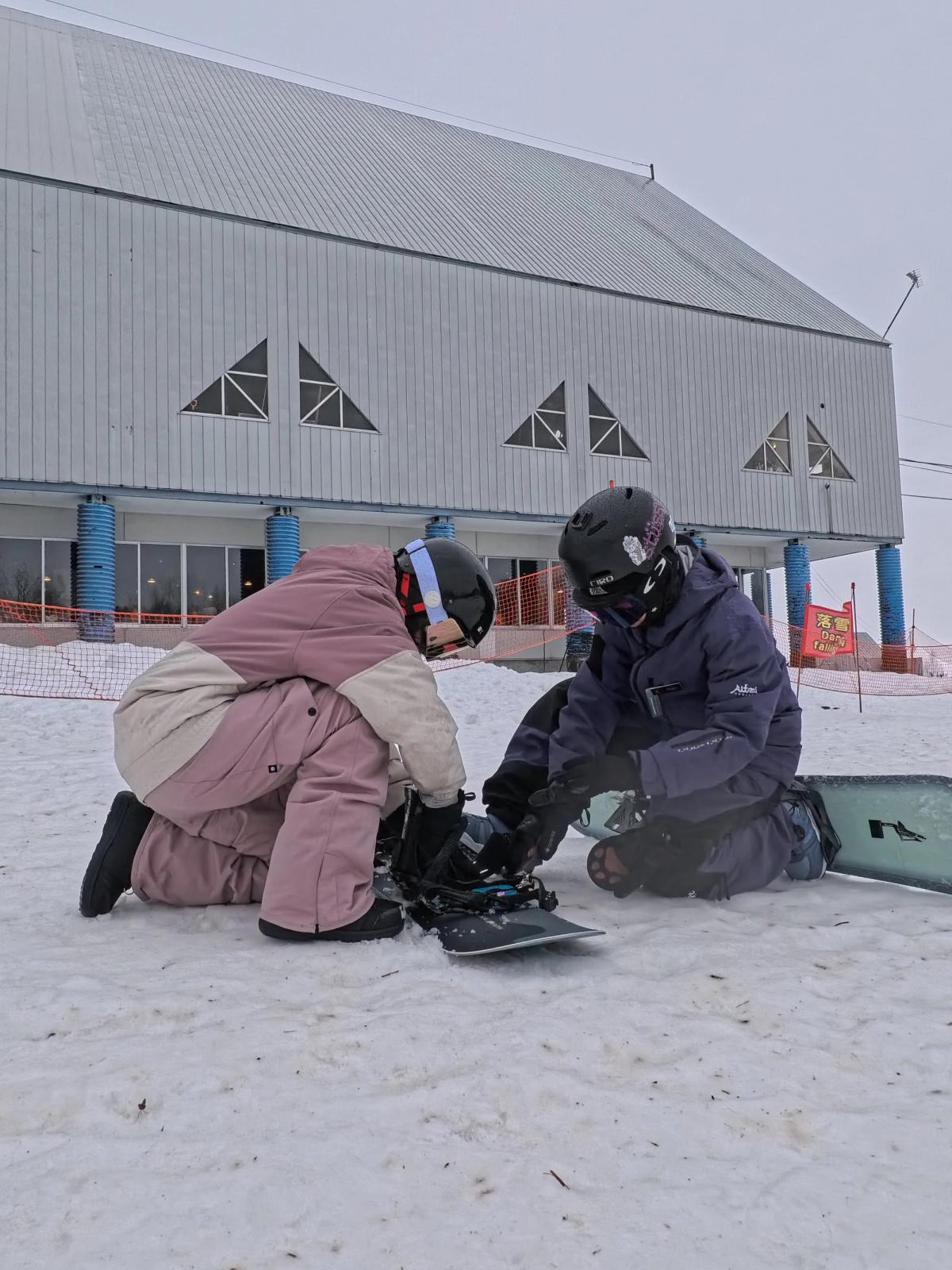
Starting from age 3
By age 3, kids' physical coordination and ability to follow instructions have developed noticeably, and they're also starting to try things out, create, and make sense of the world on their own.
Kids at this age often show anxiety, resistance, or hesitation, and need a lot of guidance and support. As coaches, we're constantly reading a child's state and feelings in the moment to find the angle that gets them willing to engage.
For kids aged 3 to 7, we recommend starting with skis rather than a snowboard. There are two reasons:
First, skis are more intuitive to control for beginners and closer to everyday movement, so kids pick up the motion faster, which makes skiing fun from the start, instead of losing interest to frustration.
Second, beginners need to get on and off lifts and get back up after falling. Skis make these things much easier to do independently, without constantly needing help from a coach or parent.
Things to Seriously Think Through Before Taking Kids Skiing
Safety always comes first
Safety breaks down into two dimensions: psychological and physical.
The Psychological Side
This might be the first time your child has ever been somewhere this cold, on top of trying a completely new sport. For more cautious kids, they'll need a lot of guidance. Start with playing in the snow, building a snowman, or just walking around on flat snow. Let them get used to this unfamiliar environment at their own pace.
The Physical Side: Getting the Gear Right
Every piece of gear matters more than you'd think. Here's what to pay close attention to before you go:
| Gear | What to watch for |
|---|---|
| Helmet | What to watch forWeight and fit both matter, so keep checking that it's comfortable for your child |
| Goggles | What to watch forChoose a pair that fits the face well, so they don't press on the nose or fog up |
| Snow jacket and pants | What to watch forKids can only tell you the most basic things ("tight," "hot," "cold"), and you'll also want to make sure snow can't get in through any gaps |
| Gloves | What to watch forShouldn't be too loose, but putting them on and off takes patient coaching. This is often the piece of gear kids resist the most |
| Boots | What to watch forThese are rigid and take some technique to put on, and too tight or too loose affects both comfort and safety |
| Bindings | What to watch forKids often get frustrated here: not enough strength, or not knowing the right angle to push, both lead to resistance |
| Skis | What to watch forFor kids, the biggest challenge is simply having these long things attached to their feet, and it takes time to get used to |
Trust Is the Most Important First Step
For a child, the whole environment, the sport itself, and even the coach are all unfamiliar.
Before the trip, you can introduce your child to what skiing is and spark their curiosity. Visiting an indoor snow center or letting them try on skis beforehand can also give them a basic feel for it.
A coach's role isn't just to teach technique. It's more like an older sibling playing alongside them. Learning through play is the goal, and the best teaching is when a child learns without even realizing it.
Language: Teaching Primarily in the Child's Native Language
We recommend teaching mainly in the child's native language at first, with a little of a second language mixed in. This removes the unfamiliarity and tension right away, letting the child experience the essence of skiing before gradually adding variation. This is exactly where a native Chinese-speaking coach has an advantage.
Related: How to Book Accommodation in Niseko: A Ski Coach's Roundup of Real Student Feedback
A Coach's Perspective: How a Children's Ski Lesson Actually Runs
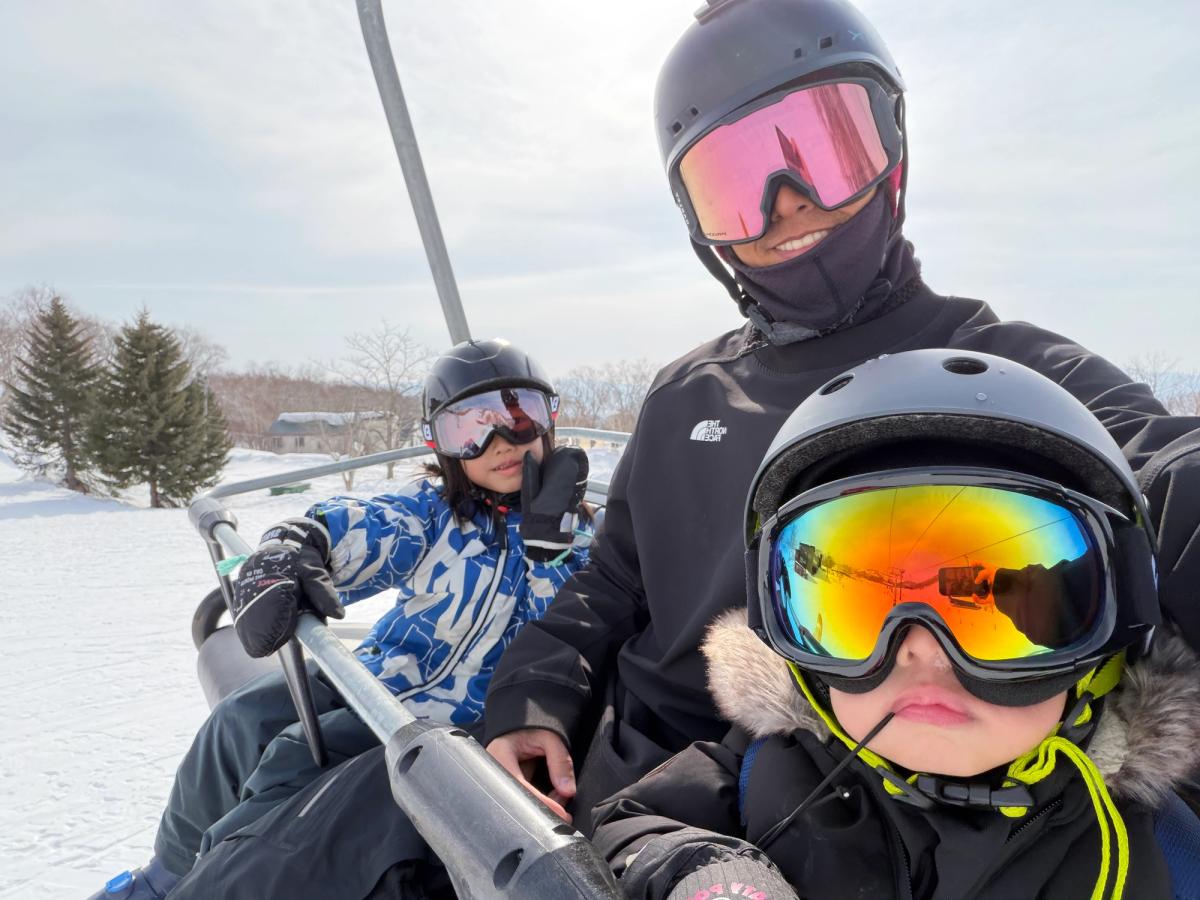
Get Creative With How You Support Them
When teaching kids to ski, the way you support them needs to be varied. Beyond just setting goals, giving them little tasks builds a sense of accomplishment. Here are a few methods we've actually used and found effective:
- Have the child hold a snowball and try not to drop it while skiing. This dramatically improves their focus
- Use simple, relatable comparisons instead of technical jargon, so the child isn't trying to memorize a move. They're just doing it
- Use open-ended questions to get them to explain their own understanding, or even let them plan the next route down the slope. This builds both their sense of accomplishment and their openness to new challenges
Technical Goals: Results Over Form
When kids learn to ski, they can't feel muscle control the way adults do. So instead of focusing on "getting the form exactly right," we practice around "hitting a goal."
There's rarely a fixed reference point in this learning process. A child won't necessarily reproduce last time's success, or make a small adjustment, on demand. Once they can control speed, we gradually add new goals; once they can control direction, we set a specific spot for them to reach. Finding the underlying control while working toward a goal is both safer and more effective than drilling muscle movements directly.
Choosing the Right Run: Balancing Safety and Challenge
Choosing the right run is its own skill. You have to factor in crowd flow, snow conditions, terrain changes, and the child's mood in the moment, all at once.
We recommend starting in a basic beginner area, watching whether the child can genuinely control their speed, before moving them onto a real run. Tailoring each lesson to the individual child's personality is the single most important part of teaching kids to ski.
The Learning Journey
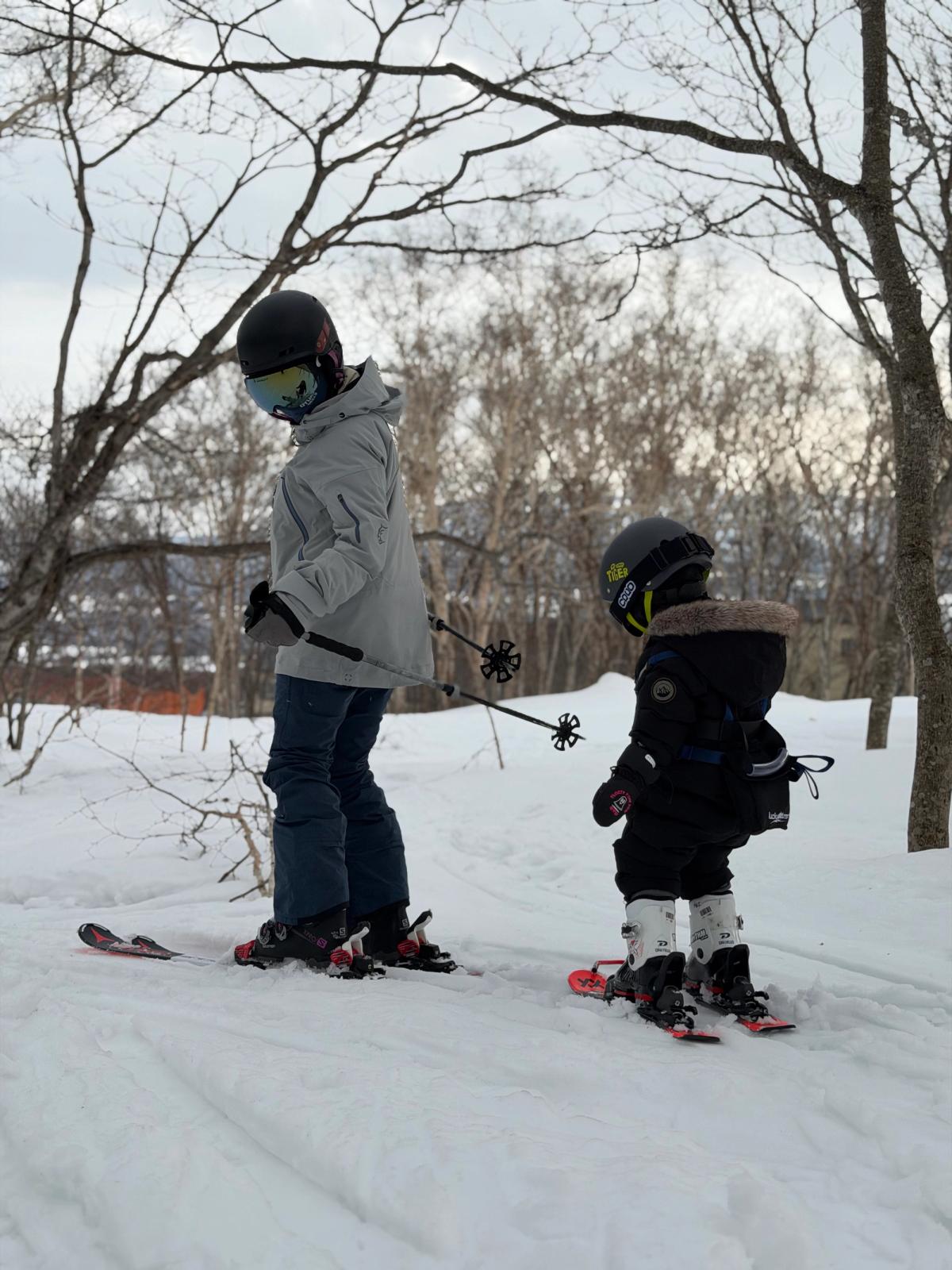
Just like adults, a child's learning progression starts with basic speed and direction control, then moves on to turning (edge changes), and finally to linked turns.
You should avoid insisting a child must nail a specific movement. Instead, look at both their physical performance and their psychological growth to judge how much progress they've actually made in a children's ski course.
In our experience, kids are usually the last member of the family who wants to leave the slopes, because they're feeling a sense of novelty and achievement unlike anything they've experienced before.
Final Thoughts
Kids' skiing isn't some big unknown. We're working to make it simple and fun.
It's not just about meeting parents' expectations. It's about letting kids genuinely feel the appeal of skiing along the way. That's what keeps them wanting to come back.
If you're considering bringing your kids to Niseko to learn to ski, feel free to reach out to us. FUYU offers private ski lessons, children's ski courses, and Mountain Guiding. Kids' courses are a key area we're continuously refining.
During lessons, we capture great moments of your child skiing, and parents are always welcome to check in with the coach during breaks. That way you can enjoy your own ski trip while knowing your child is learning and growing in a safe environment.
Frequently asked
Next step
Bringing your kids for the first time? Choosing the right resort and lessons makes the day safer and more fun.